Why Being a Dental Assistant Is a Fun and Rewarding Career
Healthcare work can be stressful. Dental assisting is no exception. Some days move fast, schedules change, patients arrive nervous, and the team has to stay calm while keeping everything clean, safe, and on time.
Yet many people are drawn to dental assisting for a reason. It is active, people-centered, practical, and often surprisingly fun. Dental assistants get to be part of real care, not from the sidelines, but right beside the dentist and the patient. They help turn a worried patient into a relieved one. They learn something new almost every day. They work with their hands, use technology, and build relationships that can make the job feel meaningful.
That mix of purpose, variety, teamwork, and skill is what makes dental assisting such a rewarding career.
Dental assisting gives every day a different rhythm
Some jobs feel the same from one day to the next. Dental assisting usually does not.
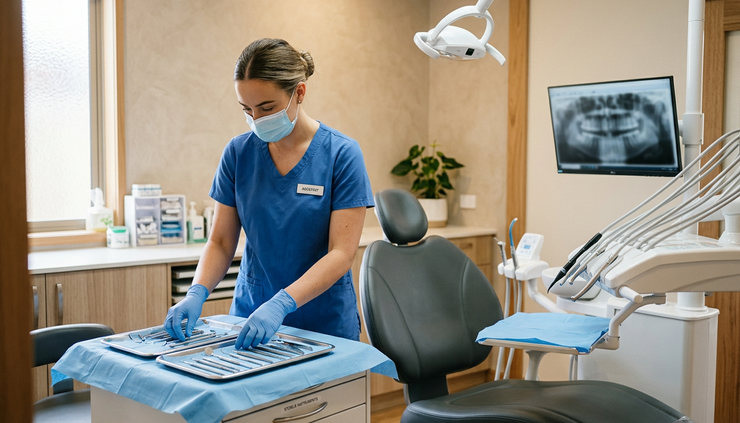
A dental assistant might start the morning preparing treatment rooms, taking dental X-rays, and helping a patient feel comfortable before a simple cleaning. Later, they may assist with a filling, a crown preparation, an extraction, or a child’s first dental visit. Between appointments, they may sterilize instruments, update patient notes, restock supplies, or explain aftercare instructions.
That variety keeps the day moving.
For people who enjoy being active, dental assisting can feel much more rewarding than sitting in one place all day. The role often blends:
Hands-on clinical support
Patient conversation
Organization and preparation
Problem-solving
Team communication
Technology and dental equipment
The pace can be fast, but that is part of what many dental assistants enjoy. There is a clear sense of motion. Patients come in, care gets delivered, needs are met, and the day has a purpose.
There is also a satisfying “behind the scenes” element. A smooth appointment rarely happens by accident. Dental assistants often help make it look easy because they have prepared carefully, anticipated what the dentist needs, and helped the patient feel settled.
That kind of competence feels good.
Helping nervous patients can be deeply rewarding
Many people feel anxious about visiting the dentist. Some had a bad experience years ago. Some worry about pain, cost, embarrassment, or not knowing what to expect. Others simply dislike the sounds, smells, and sensations of dental care.
Dental assistants often become the calming presence in the room.
They greet the patient, explain what will happen, answer simple questions, offer reassurance, and notice when someone needs a break. A gentle tone, a warm smile, and clear instructions can change the whole appointment.
That role matters.
A patient may not remember every instrument used during a procedure, but they often remember how they felt. Did someone listen? Did someone explain things without judgment? Did someone help them get through an appointment they had been dreading?
Dental assistants are often the person who provides that support.
This is one reason Why Being a Dental Assistant Is a Fun and Rewarding Career is more than a feel-good idea. The work has visible emotional impact. You can see a patient unclench their hands. You can hear the relief in their voice after treatment. You can watch someone leave more confident than when they arrived.
Those moments can stay with you.

The job is social without being all talk
Dental assisting is a great fit for people who enjoy working with others, but still want practical tasks and clear responsibilities.
The role involves plenty of interaction, but it is not just conversation. Dental assistants communicate while doing meaningful work. They help patients understand what comes next. They check in during procedures. They coordinate with dentists, hygienists, front desk team members, and sometimes dental lab partners.
That social side can make the workday enjoyable.
A dental office can develop a real team feeling. Everyone has a role, and when the team works well together, the day feels smoother. The dentist focuses on treatment. The assistant anticipates needs. The hygienist manages preventive care. The front desk keeps scheduling and communication moving. Each person affects the patient’s experience.
Dental assistants often become the connection point between these parts of the practice.
That can be fun because it calls for awareness and timing. A good assistant notices the small things:
The dentist reaching for an instrument before asking for it
A patient looking confused during instructions
A room that needs to be turned over quickly
Supplies running low before the next appointment
A child needing a little humor before opening wide
This kind of awareness makes the job engaging. It is not passive work. It asks you to be present.
There is a real sense of accomplishment
Dental assistants can usually see the results of their work right away.
A room is prepared. A nervous patient becomes comfortable. A procedure is completed. A child gets through an appointment with less fear. A patient learns how to care for a new crown, extraction site, or aligner. Instruments are sterilized and ready for the next person.
That immediate feedback can be motivating.
In many careers, the outcome of your effort may take weeks or months to appear. In dental assisting, progress often happens by the hour. The work has a beginning, middle, and end. That creates a steady sense of accomplishment throughout the day.
There is also pride in mastering details.
At first, dental terminology, instruments, materials, and procedures can feel like a lot. Over time, things begin to click. You learn the difference between similar tools. You understand the flow of a filling appointment. You know how to set up for different procedures. You recognize what a dentist may need next.
That growth builds confidence.
A dental assistant who once felt unsure may become the person new team members look to for guidance. That is rewarding in a very practical way. You can feel yourself getting better.
Dental assisting blends science, skill, and personality
One of the fun things about dental assisting is that it uses different sides of a person.
The science side shows up in anatomy, infection control, radiography, dental materials, and oral health education. The hands-on side appears in instrument transfer, suctioning, impressions or scans, room setup, and equipment care. The human side comes through in communication, patience, humor, and compassion.
That mix keeps the job from feeling one-dimensional.
For example, assisting during a procedure is a skill. It requires timing, focus, and hand-eye coordination. The assistant needs to keep the field clear, pass instruments safely, and help the dentist work efficiently. At the same time, the assistant may be watching the patient’s comfort and giving small cues that help them relax.
That is a lot happening at once.
For the right person, this challenge is energizing. It feels active and useful. It is also a career where personality can make a real difference. A calm assistant helps a stressful procedure feel more manageable. A cheerful assistant can make a routine visit more pleasant. A patient assistant can help someone feel less embarrassed about asking questions.
Technical skill matters, but so does kindness.

The career can offer a strong starting point in healthcare
Dental assisting can be a practical way to enter healthcare without spending many years in school. Requirements vary by state and by the duties performed, so training, certification, and licensing rules are not the same everywhere. Many dental assistants complete a formal program, while some learn through a mix of education and supervised experience.
For people drawn to healthcare, this can be appealing.
Dental assisting gives exposure to patient care, clinical routines, infection control, records, imaging, and treatment planning. It can also help someone discover what part of dentistry or healthcare they enjoy most.
Some dental assistants stay in the role long term and build a fulfilling career. Others use it as a foundation for related paths, such as:
Dental hygiene
Expanded functions dental assisting, where allowed
Dental office management
Dental treatment coordination
Dental lab work
Dental sales or education
Public health dental programs
A rewarding career does not always mean one fixed path. Dental assisting can open doors while still being meaningful on its own.
It can also offer stability. People need dental care in communities across the country, from small towns to large cities. While no career is stress-free or guaranteed, oral health is a steady part of overall health, and dental teams depend on trained assistants.
Fun often comes from the little moments
A job does not need to be easy to be enjoyable. Sometimes the fun comes from small, ordinary moments that add up.
In dental assisting, that might look like:
A child proudly choosing a toothbrush after a successful visit
A longtime patient remembering your name
A team laughing together between appointments
A nervous patient saying, “That was better than I expected”
A dentist and assistant working in sync without many words
A patient smiling after treatment they had put off for years
Those moments bring warmth to the workday.
Dental offices can also have a surprisingly upbeat atmosphere. Many teams celebrate patient milestones, decorate for holidays, play light music, or create small routines that make the day feel less clinical. The work still needs focus and professionalism, but that does not mean it has to feel cold.
For people who enjoy both structure and connection, dental assisting can offer a nice balance.
There are checklists, procedures, and safety standards. There are also people, stories, laughs, and moments of genuine gratitude. That combination is part of what makes the role feel alive.
The stressful parts are real, but they can be managed
It would not be honest to say dental assisting is always fun. Healthcare comes with pressure, and dental offices can be busy.
Dental assistants may deal with tight schedules, late patients, emergency appointments, difficult procedures, supply issues, or people who are in pain or afraid. The role can also be physically demanding. Standing, leaning, reaching, and staying focused for long periods can take energy.
The rewarding part is that many of these challenges become easier with training, teamwork, and experience.
Strong dental assistants learn how to pace themselves. They use body mechanics when possible. They ask questions. They stay organized. They communicate clearly with the team. They learn not to take patient anxiety personally.
A healthy workplace matters too. A supportive dentist, respectful team culture, and clear systems can make a major difference in how the job feels. The best dental teams understand that patient care improves when staff feel supported.
Stress may be part of the career, but it does not erase the good parts. In many cases, the challenge is exactly what makes the wins feel meaningful.

The right fit makes the career even more rewarding
Dental assisting tends to suit people who like active work, variety, and human connection. It helps to be organized, calm under pressure, and willing to keep learning. A good sense of humor helps too.
The role may be especially satisfying for someone who enjoys:
Working with their hands
Helping people feel at ease
Learning practical healthcare skills
Being part of a close team
Moving through a busy day with purpose
Seeing the results of their work quickly
No career is perfect for everyone. Some people prefer slower, quieter jobs. Others may not enjoy the clinical setting. But for those who like a mix of science, service, and teamwork, dental assisting can be a strong match.
A fun and rewarding job does not mean every day is easy. It means the hard parts serve a purpose. Dental assistants help people get care, protect their health, and feel less afraid in a setting many patients find stressful.
That is meaningful work.
At its best, dental assisting offers the satisfaction of doing something useful, the energy of a busy team, and the joy of making patients feel cared for. If that combination sounds appealing, this career is worth a closer look.


Comments